
Rich chicken noodle soup is the peak of comfort food. Yet, cooks often ruin this masterpiece. The disappointment is real when the golden broth tastes thin. Also, the tender noodles turn into mush. Ultimately, intentional technique creates the difference between a weak soup and a satisfying, classic bowl. This guide reveals three simple secrets. They move your recipe from adequate to extraordinary.
Me Trying to Make This Recipe: Why You Need This Rich Chicken Noodle Soup Method
For years, my homemade soup lacked flavor. The vegetables were always soggy. Also, the homemade broth never tasted deep or golden enough. Consequently, I avoided making the dish. I finally solved that frustration. I used these simple culinary rules. Therefore, I am sharing this method. Every kitchen deserves a flawless, rich chicken noodle soup. I provide this complete guide. It permanently corrects this common kitchen failure in your home.
Why You’ll Love This Recipe: 5 Reasons This is Your New Favorite Rich Chicken Noodle Soup
This recipe ensures success. First, roasting the bones creates intense savory broth. Second, a simple, separate-cooking method stops mushy noodles permanently. Third, late addition guarantees crisp-tender vegetables. Furthermore, the guide explains the process fully with expert detail. Finally, this flavorful and rich chicken noodle soup will satisfy any cold-weather craving. It gives you both nourishment and unparalleled flavor.
Core Ingredients for the Ultimate Rich Chicken Noodle Soup
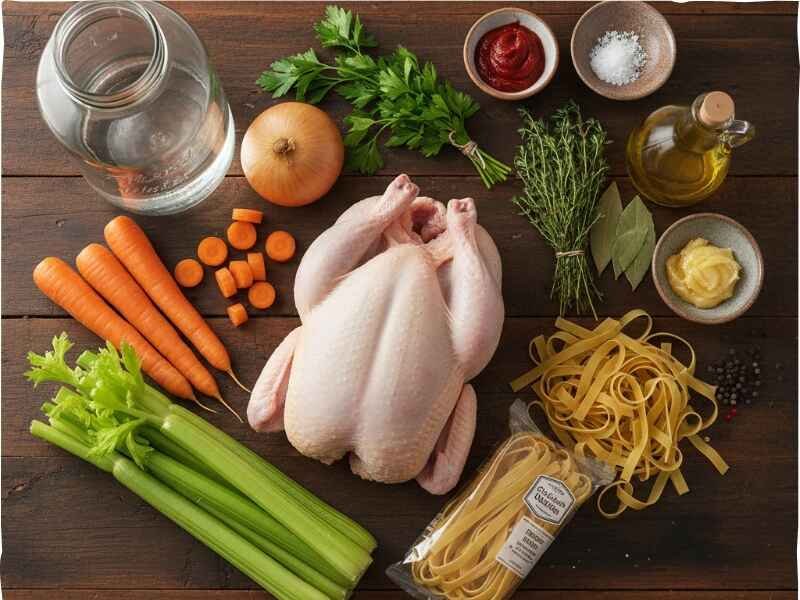
The starting ingredients determine the quality of the final product. Always select fresh, high-quality items. Treat the components of this dish with respect. This guarantees optimal results.
The Meat and Bone Foundation
Chicken: We prefer bone-in chicken parts (thighs and legs). You can also use a whole roasted carcass. This gives maximum flavor. The bones are essential. They contain collagen. Collagen converts into gelatin. Gelatin makes the structure of the rich chicken noodle soup broth. For this reason, strictly avoid boneless meat when simmering.
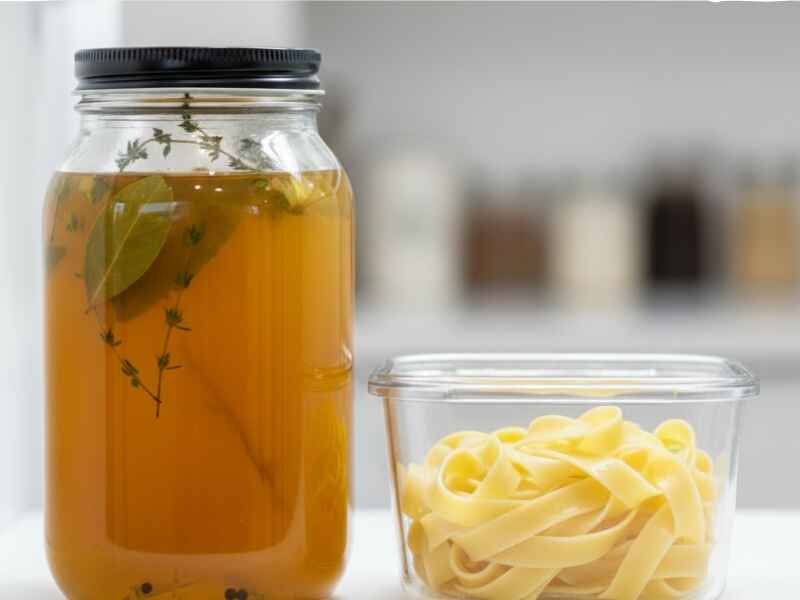
Water: We recommend cold, filtered water. Never use hot water. Cold water allows the slow extraction of impurities and proteins. Consequently, this leads to a clearer final stock.
Aromatics and Flavor Enhancers
- Aromatics: You must use carrots, celery, and yellow onion (mirepoix). Use a precise 2:1:1 ratio. These ingredients provide the base sweetness of the rich chicken noodle soup.
- Herbs: Fresh thyme, parsley stems, and bay leaves are essential. Do not discard the parsley stems. They hold concentrated flavor. This flavor releases during the long simmer.
- Fats: Use a neutral oil or clarified butter (ghee). This is for sweating the vegetables. The fat draws out flavor compounds.
- Uncommon Ingredient (Color & Depth): You can add a small spoonful of tomato paste while browning. This deepens the final color of your rich chicken noodle soup. Furthermore, this step makes the soup look much better.
The Noodle Component
- Noodles: We recommend egg noodles or medium-sized pasta. For example, use penne or rotini.Significantly, thin noodles should be avoided as they are more susceptible to becoming mushy, even with the separate-cooking method.
How to Achieve Rich Chicken Noodle Soup in 3 Simple Steps
We divide the process into three critical stages. You must follow each stage precisely. This guarantees a truly rich chicken noodle soup.
1: The Broth Base (The Maillard Method)
Roasting Completed: Place chicken bones or meat scraps on a sheet pan. Roast them at 400°F (200°C) for 30 minutes. Therefore, this browning process creates deep, complex flavors.
Aromatics Rendered: Remove the roasted chicken from the oven. Next, melt the fat in the stockpot, and add the mirepoix. Slowly sweat the vegetables over medium-low heat for 15 minutes. Continue until they are tender and translucent. Importantly, do not allow the pot to scorch.
Simmer Initiated: Add the roasted chicken and bones to the pot, along with the herb sprigs and bay leaves. Then, pour cold water over the ingredients. Bring the pot to a boil. Skim off and discard any foam or scum that rises to the surface. Furthermore, this initial skimming ensures a clear broth.
2: The Long-Simmer Secret (Time as an Ingredient)
Gentle Simmering Maintained: After the initial boil, immediately reduce the heat. Use the lowest possible setting. The broth simmers for a minimum of four hours, but preferably six hours. This long process is essential. It converts collagen into gelatin. Gelatin provides the “richness” of the rich chicken noodle soup. Simmering bones for four to six hours is standard practice. Keep the mixture at a low, gentle simmer below the boiling point. This safely and slowly extracts the flavor and beneficial compounds. Therefore, monitor the temperature carefully.
A rich broth leaves a subtle, sticky, lip-smacking sensation. The gelatin extracted during the long simmer causes this feeling. Therefore, this stickiness is desired.
Straining Performed: After simmering, remove the pot from the heat. Discard all solids (bones, vegetables) by pouring the broth through a fine-mesh sieve or chinois. You must line the sieve with cheesecloth. Therefore, the resulting liquid is now the master stock.
Broth Seasoned: Taste the clear stock. Season it aggressively with salt and freshly cracked black pepper. Importantly, season the stock slightly stronger than required. This is because the noodles will absorb some of the saltiness later.
3: The Noodle Strategy (Preventing Mush)
Noodles Cooked Separately: Boil the noodles in a separate pot of heavily salted water. Cook them only to the al dente stage. This takes 1–2 minutes less than the package directions.
Noodles Coated: Immediately drain the noodles. Toss them with a tablespoon of olive oil or butter. This coating is vital. It seals the starch. This prevents liquid absorption. Liquid absorption leads to a soggy rich chicken noodle soup.
Final Assembly is Executed: Reheat the master stock. Add fresh, small-diced vegetables (carrots, celery). This happens during the last 15 minutes of heating to keep their texture crisp-tender. Finally, shred the chicken meat and return it to the broth. Serve the oiled noodles into individual bowls. Pour the hot broth over them.
Fueling Your Body with Rich Chicken Noodle Soup
This rich chicken noodle soup is a known powerhouse of nutrients. The slow simmering process ensures that the broth extracts essential vitamins and minerals from the bones and vegetables. Furthermore, the chicken provides lean protein, which is necessary for muscle maintenance. Ultimately, the warmth and nutrient density make this an ideal meal for wellness and recovery.
The Digestive and Immune Benefits of Rich Chicken Noodle Soup
The long simmer creates gelatin. Gelatin breaks down into amino acids (glycine and proline). We believe these compounds help gut health and digestion. Moreover, the steam from the hot soup clears nasal passages. Doctors recognize this benefit during illness. Consequently, eating this rich chicken noodle soup gives you a major health benefit. The final dish helps both your body and your soul.
Elevating Your Rich Chicken Noodle Soup: Presentation Tips
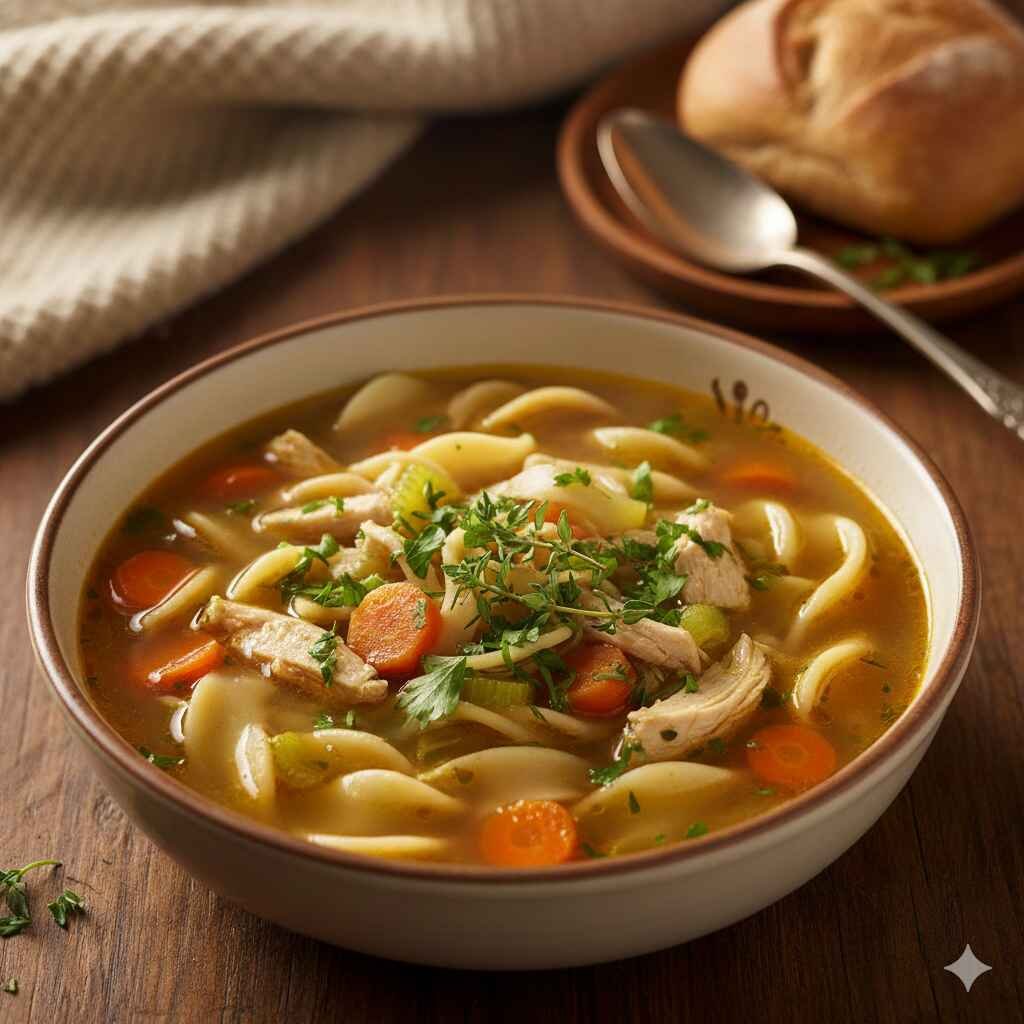
Mindful presentation improves a classic dish. Therefore, serve the soup in pre-warmed bowls. Immediately before serving, sprinkle a generous amount of fresh, chopped parsley or dill over the top. Furthermore, add a squeeze of fresh lemon juice to brighten the overall flavor. You typically offer a side of crusty bread for dipping. A vibrant garnish enhances the visual appeal.

The Best Way to Store Rich Chicken Noodle Soup
To ensure your leftovers remain a delicious rich chicken noodle soup, separate the cooked noodles from the broth and vegetables. This stops the noodles from turning into a soggy stew. This separation is mandatory. It preserves the texture of both components.
When reheating, first warm the desired amount of broth and chicken mixture. Heat it until it is fully heated. Next, add the chilled noodles just before eating. In this way, you maintain a perfect, non-soggy texture for up to four days in the refrigerator. Furthermore, you can freeze the broth for up to three months. This makes the method excellent for meal preparation.
Essential Tools for the Perfect Rich Chicken Noodle Soup
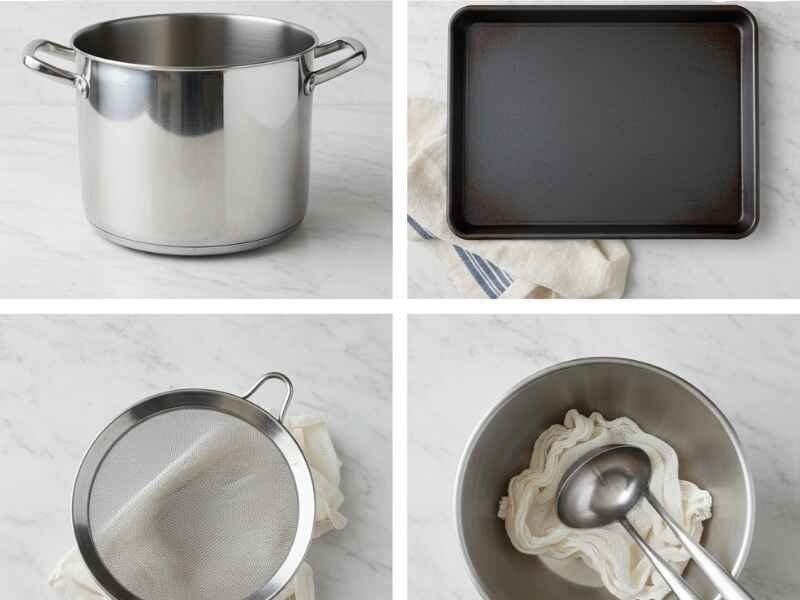
Only minimal equipment is needed to create this incredible dish. Primarily, you require a large, heavy-bottomed stockpot or Dutch oven for the simmering process. The heavy bottom prevents scorching during the crucial initial browning phase. Additionally, you use a fine-mesh sieve or a piece of chinois cloth for straining the broth. Furthermore, you need a separate smaller pot for cooking the noodles. Finally, a ladle is recommended for ease of serving.
Expert Hacks to Guarantee Rich Chicken Noodle Soup Success
Pro Tips Achieving Richness
- Clarifying the Broth: You can clarify the broth. Add whisked egg whites during the cooling process. As the broth is strained, the egg whites capture impurities. Consequently, this yields a crystal-clear result. Professional chefs often use this technique.
- Umami Boost: Add a small dash of high-quality fish sauce at the very end. This is a very uncommon secret. Surprisingly, you will not notice the fish flavor. Instead, the dash of sauce magnifies the depth of the broth. Alternatively, you can add dried shiitake mushrooms during the last hour of simmering to achieve a similar result.umami complexity in the rich chicken noodle soup.
- Fat Management: You often stir a tablespoon of cold butter into the broth right before serving. This technique is known as monter au beurre. Consequently, it provides a luxurious mouthfeel. This truly characterizes a rich chicken noodle soup.
Troubleshooting: Saving Your Rich Chicken Noodle Soup
- Broth is Too Pale/Thin: You can save the soup by quickly sautéing a quartered onion until deep brown. Add it back to the simmering pot for the final hour. Alternatively, dissolve a quality bouillon cube or use a small pinch of turmeric for color to improve flavor depth.
- Broth is Too Fatty: You easily defat the final broth by chilling it overnight. Once cold, simply scrape the hardened layer of fat off the top before reheating. This is the most effective method.
- Vegetables are Too Soft: You must add vegetables in two stages. First, the mirepoix provides the flavor base (remove this before serving). Second, add fresh, small-diced vegetables only 15 minutes before the final serving. This guarantees a crisp-tender texture.
Common Questions About Rich Chicken Noodle Soup
Can I use pre-made stock for this rich chicken noodle soup?
Making a truly rich chicken noodle soup from scratch is best. However, you can use quality store-bought broth. However, you will need to improve the flavor depth. This involves caramelizing the mirepoix and adding roasted chicken meat. This extra effort is necessary. It mimics the long-simmer gelatin richness.
Why are my noodles still mushy even after storing separately?
The noodles must be tossed with oil after draining. Furthermore, do not reheat them in the broth. Instead, add them to the already hot broth just before eating. The temperature difference is key.
How do I know if the broth is “rich” enough?
Making a truly rich chicken noodle soup from scratch is best. However, you can use quality store-bought broth.
Is it safe to simmer chicken bones for four hours?
Yes, simmering bones for four to six hours is standard culinary practice. You must keep the mixture at a low, gentle simmer below the boiling point. This safely and slowly extracts the flavor and beneficial compounds. Therefore, you must carefully monitor the temperature.
Achieving The Ultimate Rich Chicken Noodle Soup
The pursuit of the perfect, classic bowl of rich chicken noodle soup finally ends here. You follow these three simple, expert secrets. Your soup will succeed. First, you build a flavor base with roasted chicken. Next, you use a long simmer for depth. Finally, you master the separate-cook noodle strategy. Consequently, the era of weak broth and mushy noodles is officially over in your kitchen. Now, you experience this comforting, nourishing dish. This satisfies your highest expectations. Furthermore, you can apply this powerful technique to all your favorite homemade soups.

Rich Chicken Noodle Soup: 3 Secrets For Rich, Non-Soggy Broth
Ingredients
- 1 (4-5 lb) roasted chicken carcass or bone-in chicken pieces (thighs/legs) For the broth foundation (Secret 1: Maillard Method).
- 1 gallon cold, filtered water (about 16 cups)
- 4 medium carrots (for stock) roughly chopped
- 2 stalks celery (for stock) roughly chopped
- 1 large yellow onion (for stock) quartered
- 6 sprigs fresh thyme
- 1 bunch fresh parsley stems
- 3 bay leaves
- 1 tablespoon neutral oil or ghee
- 1 teaspoon tomato paste Optional, for color/depth.
- 1 (12 oz) bag wide egg noodles
- 1 tablespoon olive oil or butter For coating noodles (Secret 3).
- 2 medium carrots small-diced (for crisp texture)
- 2 stalks celery small-diced (for crisp texture)
- 1/4 cup fresh chopped parsley or dill For garnish.
- Salt and freshly ground black pepper To taste.
Equipment
Method
- Secret 1: Roast Chicken & Aromatics: Place chicken bones/meat on a sheet pan and roast at 400°F (200°C) for 30 minutes. Meanwhile, sweat the roughly chopped mirepoix (carrots, celery, onion) in oil in the stockpot for 15 minutes until translucent.
- Initiate Simmer: Add the roasted chicken, herbs, and bay leaves to the pot. Pour cold water over the ingredients. Bring to a boil, then immediately skim and discard any foam or scum from the surface.
- Secret 2: Long Simmer: Reduce heat to the lowest setting and simmer gently for 4 to 6 hours (360 minutes). This is essential for extracting collagen (gelatin) for a rich, sticky broth.
- Strain and Season: Remove the pot from heat. Discard all solids by pouring the broth through a fine-mesh sieve lined with cheesecloth. Season the clear master stock aggressively with salt and pepper.
- Reheat Broth & Final Vegetables: Reheat the master stock. Add the small-diced fresh carrots and celery (the ‘crisp’ batch) for the last 15 minutes of heating. Return the shredded chicken meat to the broth.
- Secret 3: Cook Noodles Separately: Boil the noodles in a separate pot of heavily salted water until *al dente* (1-2 minutes less than package directions). Drain immediately.
- Coat Noodles: Immediately toss the hot, drained noodles with 1 tablespoon of olive oil or butter to seal the starch and prevent the liquid absorption that leads to a soggy rich chicken noodle soup.
- Serve: Serve the oiled noodles into individual bowls first. Pour the hot broth mixture over the noodles. Garnish generously with fresh parsley or dill.